-
Iconic Impressions Advertising
- September 15, 2026
- Comment (1)
What Is Metal Branding and How Can It Strengthen a Business’s Brand Identity?
Table of Contents
- Key takeaways
- What does metal branding actually mean?
- Why are businesses choosing metal over other materials?
- The role of fabrication and laser cutting in metal branding
- How does metal branding strengthen brand identity?
- Common applications across industries
- Choosing the right partner for metal branding projects
- Conclusion
- Frequently asked questions
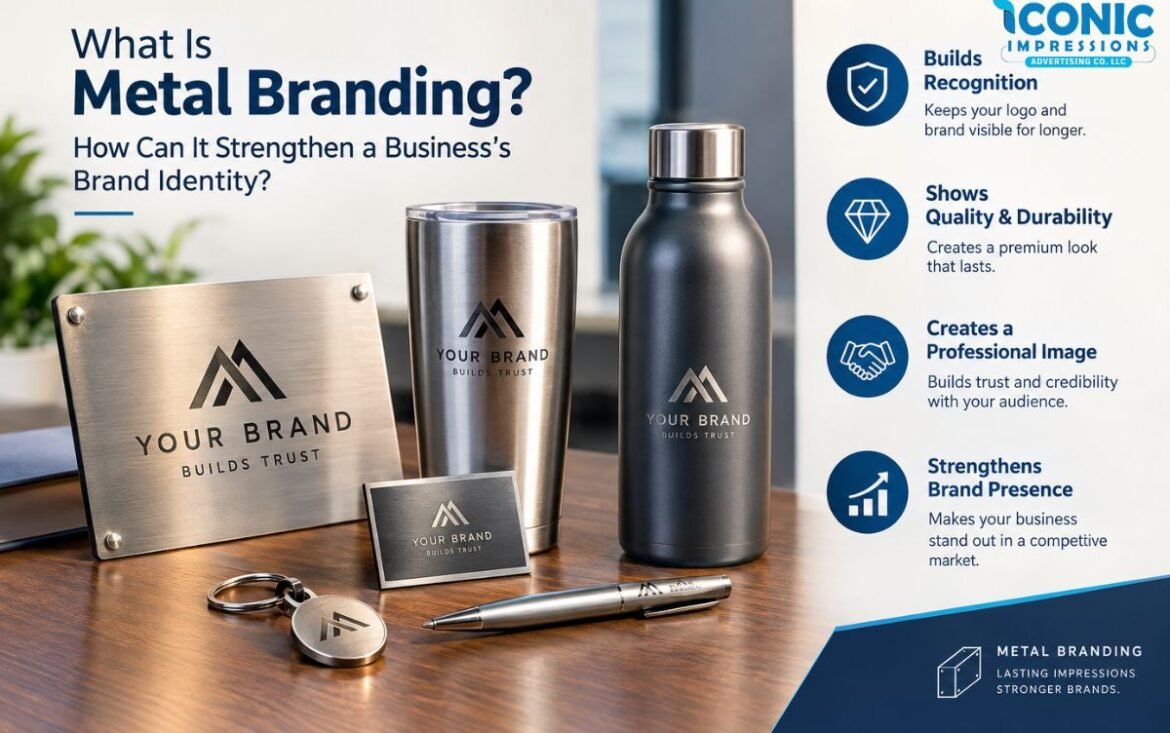
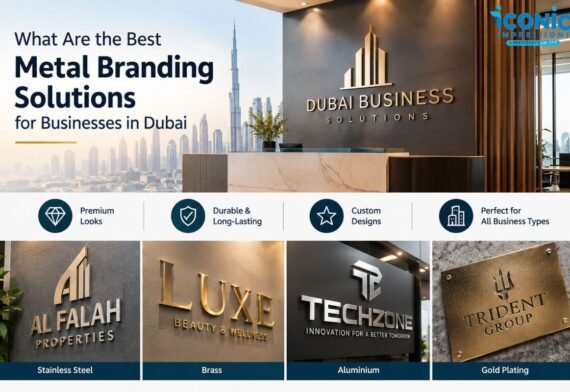
Metal branding refers to the process of turning a business’s logo, name, or overall identity into a lasting metal exhibit, plaque, sign, or architectural feature. Entrepreneurs go for metal branding because of the material’s associations with quality and longevity, unlike vinyl and plastic.
Business owners looking for a metal branding solution in Dubai are usually drawn to three major benefits of the product. First of all, it is resistant to heat. Secondly, it creates a premium impression the moment someone sees it. Finally, it fits perfectly with modern manufacturing technologies, such as laser cutting.
Key takeaways
- Metal branding utilizes stainless steel, brass, and aluminum for durable signage for brands and businesses.
- Precision laser cutting enables detailed designs and gives the logo a clean finish.
- The hot weather and busy streets of Dubai make metal branding easily usable.
- The experience of the company also influences the quality of the signage and its lifespan in outdoor conditions.
What does metal branding actually mean?
Metal branding is not limited to just one single item. It refers to a broad range of products, including a brushed-steel sign in the reception area as well as a full storefront façade with the logo cut into it. What links the various products is metal itself and the unique quality that it has.
If you compare an ordinary vinyl printed banner and the magnetic branding steel sign attached to your building entrance, they both give the same information, yet they do not convey the same detailed message. One of them may look very temporary, while the other one gives the impression of a surface that has not only been made to last but is also connected with the reputation of the company.
That is the probable reason why metal branding in Dubai is used in places where first impressions matter the most: corporate offices, hotel lobbies, retail flagship stores, exhibitions, and manufacturing plants wishing to look reliable instead of flashy.
Why are businesses choosing metal over other materials?
Dubai has a specific set of conditions that push businesses toward metal, and it’s not just about looking good.
Summer temperatures here regularly climb past 45°C, with UV exposure that stays intense for most of the year. Acrylic and vinyl fade, warp, or crack under that kind of sustained heat. Metal fabrication in Dubai has grown as an industry largely because stainless steel, aluminum, and brass hold their finish and structural integrity when other materials give out.
Then there’s the sheer density of signage along stretches like Sheikh Zayed Road and Business Bay. Standing out there takes more than a bright color scheme. A well-fabricated metal sign with dimensional lettering or a brushed finish catches light differently than anything flat and printed, which pulls attention without needing to be oversized.
Furthermore, regulations play a role too. Several Dubai municipalities and free zones have specific durability and safety requirements for illuminated or projecting signs. Metal fabrication services in Dubai are generally better equipped to meet those structural codes than lighter materials are.
There’s also a cultural fit worth mentioning. Dubai’s commercial identity leans heavily on luxury retail, hospitality, and real estate, and metal branding matches how businesses in those spaces want to be seen. It’s no accident that most five-star hotels and high-end developments lean on metal signage and architectural branding elements rather than printed alternatives.
The role of fabrication and laser cutting in metal branding
Metal branding only works as well as the fabrication behind it. Most business owners underestimate how much the technical side matters until they see it go wrong.
Manual routing and basic CNC cutting struggle with fine detail, especially thin lettering, tight gaps, or curved typography. Laser cutting services Dubai providers now offer to solve that directly. A laser can cut steel, brass, or aluminum with tolerances measured in fractions of a millimeter, so even a detailed logo keeps its shape and stays legible once it’s in metal.
There’s a cost side to this too, and it surprises people. Laser cutting wastes less material and takes less production time than older methods, so custom metal branding often costs less than businesses assume going in. A lot of people assume metal automatically costs more than printed signage. Depending on size and complexity, laser-cut metal can actually land close to premium printed pricing, and it won’t need replacing every year or two the way printed signage often does.
Beyond the cutting itself, fabrication involves a few other steps that matter:
- Finishing: such as powder coating, anodizing, or brushed and mirror polishing- which shapes both look and corrosion resistance.
- Welding and assembly: for three-dimensional or built-up letter signage, where individual letters get fabricated and mounted with internal lighting or standoff spacers.
- Backlighting integration: common in halo-lit channel letters, which need internal wiring space planned during fabrication, not squeezed in afterward.
Getting these right takes real metal fabrication services in Dubai expertise, not just equipment access. A fabricator who understands how metal warps under heat, how to weld without distorting a sign, and how to keep finishes consistent across a large installation makes a difference you’ll notice years down the line, not just at handover.
How does metal branding strengthen brand identity?
- Brand identity builds up through repeated signals. A business card, a website, a storefront, each one either backs up the brand or chips away at it. Metal branding does a few specific things worth understanding rather than assuming.
- It signals that a business has invested in itself. People read the quality of physical branding as a stand-in for the quality of the business behind it, whether they realize it or not. A company with a well-made metal sign is telling every visitor, without saying a word, that it takes its own reputation seriously.
- It also holds up better over time, which matters more than people think. A vinyl sign that fades unevenly after a year looks worse than no sign at all, because now it looks neglected. Metal, finished properly, keeps its appearance for years and protects the brand instead of slowly working against it.
- The same fabrication principles scale up or down without losing consistency. A small reception desk logo and a full building facade come from the same process, which means a business can look the same whether someone’s standing two feet from a nameplate or a hundred meters from a storefront.
- Additionally, increasingly, metal shows up inside spaces too, not just on the exterior. Metal wall art with brand motifs, engraved directional signage, display fixtures that carry the brand’s visual language into the physical experience of walking through a store or lobby.
Iconic Impressions Advertising is one agency that has built real depth in this space, working across signage, acrylic displays, vehicle branding, and custom metal and woodcraft pieces for businesses across the UAE. What their work shows, more than anything, is that metal branding lands best when it’s part of the brand strategy from the start, not bolted on afterward once someone decides the building needs a sign.
Common applications across industries
Metal branding covers more ground than storefront signage alone:
- Corporate offices: reception logos, wayfinding signage, boardroom nameplates in brushed or mirror-finished metal.
- Retail and hospitality: illuminated channel letters, metal display fixtures, branded architectural details on facades.
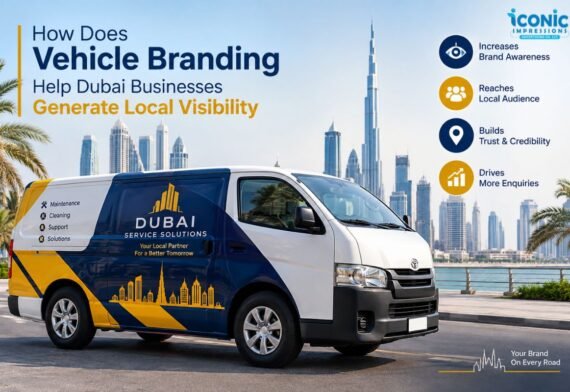
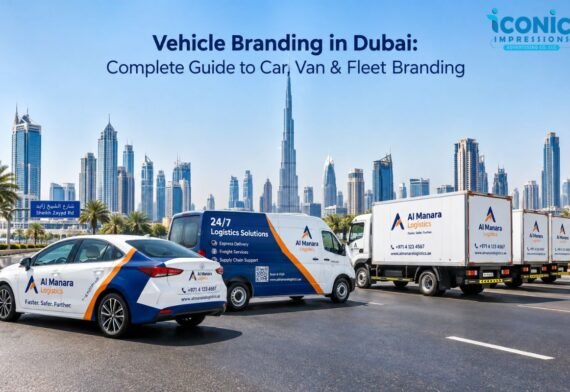
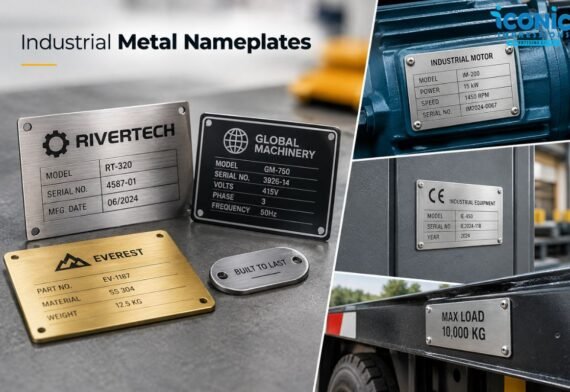
- Automotive and industrial: vehicle branding, equipment nameplates, durable outdoor identification for warehouses and factories.
- Real estate and construction: developer branding on site hoardings, building directories, permanent signage once a property is complete.
- Events and exhibitions: temporary but high-impact metal-look branding for trade shows and product launches.
Therefore, Iconic Impressions Advertising handles several of these categories at once for its clients, and that matters more than it sounds. Businesses usually need consistent branding across more than one of these applications simultaneously, not a single standalone sign.
Choosing the right partner for metal branding projects
Fabricators vary a lot in quality, and this is usually where things go wrong for businesses that don’t check first. A few things worth confirming before you commit:
- Ask to see finished installations, not renders. Renders always look perfect. Actual finished metalwork tells you what a fabricator can really do.
- Confirm what finishing options they offer and whether they’ve worked with your specific metal before. Aluminum, stainless steel, and brass all behave differently during cutting and finishing.
- Ask whether they handle the full process in-house, including the laser cutting services Dubai jobs typically require, or whether they outsource parts of it, since that affects both cost and turnaround.
- Ask about weather resistance guarantees. Given Dubai’s climate, this isn’t optional.
Get this right the first time, and you skip the expensive problem of replacing poorly fabricated signage within a year or two.
Conclusion
At its core, metal branding solves one problem: making a brand feel permanent and trustworthy the moment someone sees it in person. Durable materials, precise fabrication, and design that’s actually thought through give businesses a physical presence printed materials can’t match, especially somewhere as demanding as Dubai. If you’re weighing options for a signage or branding project, the next real step is talking to a fabricator who can walk you through material choices, finishing, and realistic timelines before you lock in a design.
Frequently asked questions
With proper finishing like powder coating or anodizing, metal signage typically lasts 8 to 15 years outdoors, well beyond what printed alternatives manage.
Not really. Less waste and less labor time often bring it close to premium printed signage in cost, while it lasts much longer.
Stainless steel, aluminum, and brass hold up best, mainly due to corrosion resistance and their ability to keep a finish under heavy heat and UV exposure.
Yes. Halo-lit and channel letter signage builds LED lighting into the metal fabrication itself, common for storefronts and entrances.
Most projects run two to six weeks, covering design approval, fabrication, finishing, and installation.
Barely any. Periodic cleaning covers most cases, though coastal or high-humidity areas sometimes benefit from occasional protective recoating.
Yes. Scaled-down work like reception signage or nameplates keeps metal branding within reach even on smaller budgets.
Fabrication is the manufacturing process. Branding is what happens when that process gets applied specifically to represent a company’s identity
1 Comment
Stainless Steel Signage in Dubai: Types, Uses & Benefits
[…] strength-to-maintenance ratio usually wins, particularly when it’s paired with precise metal fabrication in Dubai that keeps edges clean and welds […]