
-
Iconic Impressions Advertising
- August 20, 2026
- No Comments
Fabric vs Vinyl Backdrop Stands: Which Is Better for Events
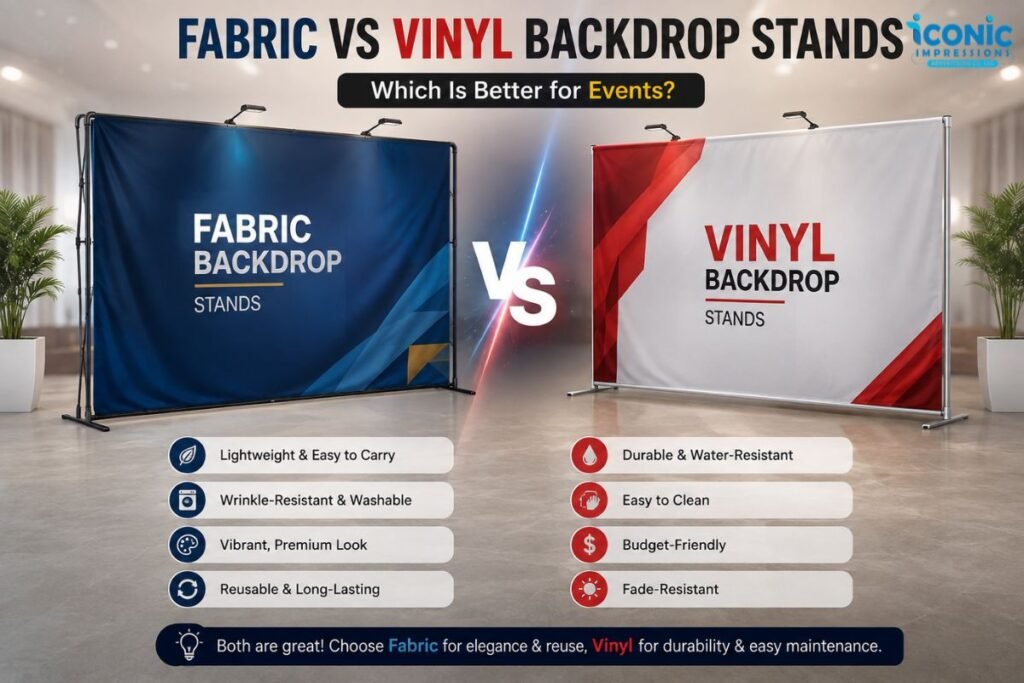
Table of Contents
- Key takeaways
- What fabric backdrop stands bring to an event?
- What vinyl backdrop stands bring to an event?
- Fabric vs vinyl: side-by-side comparison
- Which one fits your event type?
- Common mistakes when choosing a backdrop
- Expert buying advice for Dubai events
- Conclusion
- Frequently asked questions
When it comes to events that are held indoors and feature many photographs, the best material to use as a backdrop is fabric, since, unlike vinyl, it doesn’t create glare from the lights and can be folded without leaving a crease. Vinyl is preferred where the product will be used outside or for extensive exhibitions, because it is much more durable against moisture and wear and tear. In Dubai, the proof of this argument lies in the numbers: the Dubai World Trade Center organized more than 401 events in 2025 with almost 3 million participants, while the entire exhibition market in UAE is set to increase by approximately 11% per year until 2035.
With all the competition for attention at the exhibitions, the choice of backdrop material plays a big role in how professional your booth will look both to its visitors and on the photographs. The conclusion is rather simple: if you are choosing to cooperate with one of the banner stand suppliers Dubai, you should choose your backdrop material according to the event’s objectives and the place where it will be held.
Key takeaways
- Fabric backdrops do not provide reflections in video and photography as vinyl backdrops do.
- Vinyl works better because they can withstand rough use, moisture, and outdoor locations.
- Fabric will cost more in the beginning but will likely last longer during repeated use.
- The best choice would depend on the venue of the event, not on whether the material is “hot” or new in the market
What fabric backdrop stands bring to an event?
Backdrops for occasions typically comprise polyester stretched over a frame for a wrinkle-free and bubble-free finish. The key to its appeal lies in that lack of imperfections. Vinyl, in case of unfavorable lighting conditions, reflects lights back to camera, while fabric absorbs it. Thus, if the event features a backdrop, the fabric solutions are better, as they do not produce unwanted reflections in images taken by guests.
The other convenience associated with fabric backdrops is the packaging issue. Fabrics can be rolled or folded in a bag without creating creases, thus negating the need for ironing or steaming before doors open. The fabric option also weighs less, which is important when the crew needs to carry equipment through a packed venue.
Furthermore, one of the downsides of using fabric outdoors is durability. Usually, it isn’t waterproof, and UV rays will affect the print faster than it does on vinyl. Those who are looking for Fabric Popup Stands and trade show display stands in Dubai for use outside should ask about weatherproof coating, since basic fabric isn’t made for that purpose.
What vinyl backdrop stands bring to an event?
Vinyl is the type of material that people go for when what matters is durability rather than aesthetics. It is thicker, water-resistant, and resists wear-and-tear such as being dragged, folded in an awkward way, and exposed to direct sunlight for several hours without fading. For an exhibition lasting three days or an advertising campaign taking place in several cities, this durability translates into savings in the long run because no reprints are required each time.
The only drawback of vinyl is the gloss of the surface. In photography, the glossier the surface is, the more light it reflects and makes it difficult to fix the error afterwards. Additionally, vinyl creases are folded instead of rolled, and a crease becomes visible in all pictures taken in the vicinity of that crease.
Fabric vs vinyl: side-by-side comparison
| Factor | Fabric | Vinyl |
| Best for | Indoor, photo/video-heavy events | Outdoor, high-traffic, long-run events |
| Surface finish | Matte, no glare | Slight sheen, visible under lights |
| Weight | Lighter, easier to transport | Heavier, bulkier to carry |
| Wrinkle resistance | Rolls or folds without creasing | Creases if folded incorrectly |
| Weather resistance | Weak unless treated | Strong, handles rain and UV well |
| Upfront cost | Higher | Lower |
| Lifespan with reuse | Long, if stored properly | Long, especially outdoors |
| Setup speed | Fast, tension-frame systems | Fast, but needs careful unrolling |
Which one fits your event type?
A product launch inside a hotel ballroom, with a photographer capturing every guest against the brand wall, calls for fabric. The lighting is controlled, guests stand close to the backdrop, and glare would ruin half the shots.
A three-day trade fair on an open exhibition ground is a different situation. Wind, dust, and constant foot traffic near the booth make vinyl the safer bet. It also survives being rolled up at the end of each day and unrolled again the next morning without the material stressing.
Therefore, corporate seminars sit somewhere in between. Indoors, moderate photography, moved between venues occasionally: either material works here, and the decision usually comes down to budget and how often the design changes. If you’re reprinting for every event, vinyl’s lower cost per print makes more sense.
Common mistakes when choosing a backdrop
Most mistakes here aren’t about picking the wrong material outright, so much as mismatching the material to the actual conditions of the event.
- Choosing fabric for an outdoor booth without weatherproofing. It fades and can develop water stains within one or two uses.
- Folding vinyl instead of rolling it for storage. Creases become permanent and show up in every photo near that fold line.
- Assuming one backdrop design works for every event type. A design built for a press wall often looks cramped on a wider exhibition backdrop.
- Ignoring the frame’s stability. A lightweight stand in a venue with heavy foot traffic or air conditioning drafts can tip or sway during the event.
- Ordering print-only, without checking colour calibration against the venue’s lighting. Colours that look sharp under daylight can shift under warm indoor lighting.
Expert buying advice for Dubai events
Dubai’s event calendar runs almost year-round, and the global exhibition industry is expected to grow from roughly USD 46 billion in 2025 to around USD 51 billion by 2026. Competition for attention at any given show is only getting tighter, which is the practical reason material choice matters more than it might seem.
A few things worth checking before ordering from any Fabric Popup Stand suppliers in Dubai or vinyl backdrop provider:
- Ask whether the fabric is coated for indoor-only use or treated for occasional outdoor exposure.
- Request a physical swatch under the actual lighting type you’ll use, not just a printed sample under office lights.
- Confirm frame weight and base stability if your venue has open doors, fans, or air conditioning vents near the display area.
- Check turnaround time separately for reprints, since some suppliers quote fast production but slow shipping within the UAE.
In our own production work, the recurring issue is rarely material quality. It’s clients picking based on what looked good in a catalogue photo, rather than what their specific venue and event format actually need.
Conclusion
There’s no universally better material here. Fabric photographs cleaner and packs lighter. Vinyl survives rougher conditions and costs less upfront. The right call depends on where the event happens and what you’re using the backdrop for. If you’re comparing options with a backdrop stand supplier in Dubai, bring your venue details and event type to that conversation before the material question, not after. Iconic Impressions Advertising works through exactly that kind of assessment with clients before recommending a material, so the backdrop matches the event rather than the other way around.
Frequently asked questions
Vinyl generally lasts longer outdoors due to weather resistance. Fabric lasts longer indoors if stored rolled, not folded, since creasing is the main cause of visible wear over repeated use.
Only with weatherproof treatment. Standard fabric fades and can water-stain quickly outdoors. Ask suppliers specifically about outdoor-rated fabric before ordering if the event isn’t fully indoors.
Yes, vinyl typically costs less upfront. Fabric costs more initially but can offer better value if reused across several indoor events without needing frequent reprints.
Yes, if folded rather than rolled for storage. Creases in vinyl are permanent and visible in photos. Proper storage in a rolled position prevents this issue almost entirely.
Fabric, because its matte surface doesn’t reflect studio or venue lighting. Vinyl’s slight sheen can create visible glare in photos, especially under bright indoor event lighting setups.
Match the material to the venue first. Indoor, photo-focused events suit fabric; outdoor or high-traffic events suit vinyl’s durability and weather resistance better.
No, both use similar tension-frame or roll-up mechanisms. Fabric is actually lighter to handle, though vinyl needs careful unrolling to avoid introducing new creases before display.
Depends on handling and storage. Vinyl outdoors may need replacing sooner due to UV fading. Fabric, stored correctly, often lasts several years of repeated indoor use.
Most established display stands suppliers in Dubai carry both, since event needs vary by client. It’s worth asking for samples of each before committing to one material.
Yes, significantly. Bright studio or flash photography lighting favours fabric’s matte finish. Standard venue lighting with less direct flash makes the glare difference between materials less noticeable